

|

|
|
Can I Still Get a DUI if I Refused Testing?
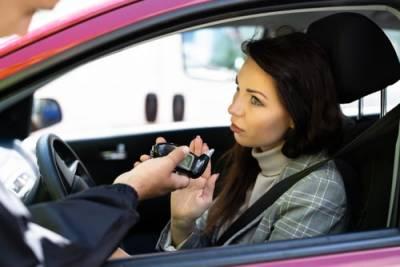 Breath tests like breathalyzers are used by law enforcement to estimate a driver’s blood alcohol content. Refusing to submit to field sobriety or chemical testing when you are suspected of driving under the influence of alcohol (DUI) carries administrative consequences, including a one-year license suspension. Some people would be willing to lose their license for a year if it means getting out of a DUI. Unfortunately, however, you can still be charged with and convicted of DUI without ever going through any formal testing.
Other forms of evidence can still be used to prove that you were intoxicated. If you have been accused of a DUI, you will need a strong legal defense even if you never submitted to testing. At Scott F. Anderson, Attorney at Law, our Arlington Heights, IL DUI defense attorney has over 25 years of experience in criminal law, which allows him to handle these kinds of cases with confidence.
What Are the Standardized Field Sobriety Tests?
The standardized field sobriety tests are three roadside exercises that police use to look for signs of impairment. The first is the horizontal gaze nystagmus test. The officer moves a pen or small light in front of your eyes and watches for jerking movements. The second is the walk-and-turn test. You take nine heel-to-toe steps along a line, turn, and walk back. The third is the one-leg stand. You raise one foot about six inches off the ground and count out loud.
Missing a step, losing your balance, or starting too early can count against you. Still, these tests are far from perfect. Nerves, injuries, age, weight, poor lighting, and uneven pavement can all affect how a person performs. A sober person can still struggle to stand on one foot on the side of a busy road at night.
If I Refuse DUI Testing, What Evidence Can Be Used Against Me in 2026?
There are many ways for the police – and later the prosecution – to prove that a person was intoxicated. Formal tests are helpful but not necessary for a DUI charge. Most people can guess when the person they are talking to is inebriated. Police officers are trained to look for other signs of drug or alcohol intoxication during the stop that can later be used to prove impairment, including:
- Slurred speech: Even if you said nothing during the stop except to identify yourself and request a lawyer, an officer could later testify that your speech was slurred.
- Coordination: Police can observe, and later tell the court, that you were moving in an uncoordinated manner even if you were not attempting formal sobriety tests. Simply stumbling as you step out of your vehicle can be used to suggest impairment.
- Mental state: Signs of confusion or disorientation, such as being unable to remember and comply with instructions or repeating yourself will not go unnoticed.
- Odors: If there is an odor of alcohol or marijuana, an officer who is trained to recognize the scent can testify that such a smell was emanating from you.
All of these signs can be quite subjective and are open to interpretation. An uncoordinated gait could be caused by footwear or slippery conditions. The smell of alcohol may be present on a driver who had a single cocktail, but is not impaired. Explanations other than intoxication may exist, but will need to be presented by a skilled attorney.
Do You Need a .08 Percent BAC Reading to Be Charged With DUI?
A .08 percent blood alcohol concentration (BAC) is not required for a DUI charge in Illinois. Many people believe they are safe as long as they stay under that number. The .08 limit is only one way to prove a DUI. Police can also charge a driver who is under the influence of alcohol to a degree that makes driving unsafe. In those cases, the prosecution relies on the officer's observations, video footage, and other evidence.
Lower limits also apply to some drivers. Commercial drivers face a .04 percent limit while operating a commercial vehicle. Drivers under 21 can lose their licenses for having any trace of alcohol in their system. A driver can also be charged for being impaired by cannabis, prescription drugs, or other substances.
Are You Allowed to Refuse a Roadside Portable Breath Test?
A portable breath test is a small handheld device that officers sometimes use before making an arrest. Most adult drivers in Illinois can refuse this roadside test. Saying no to the portable device does not carry the same license penalties as refusing chemical testing after an arrest. Officers mainly use these results to decide whether they have enough reason to arrest someone. The results are not usually the main evidence used to prove a DUI at trial.
Refusing the portable test will not always prevent an arrest. As mentioned previously, officers can still rely on other signs, such as the smell of alcohol or poor performance on field tests.
Can You Refuse Chemical Testing After a DUI Arrest in Illinois?
Chemical testing after a DUI arrest in Illinois falls under the state's implied consent law. Anyone who drives on Illinois roads is considered to have agreed to breath, blood, or urine testing after a lawful DUI arrest (625 ILCS 5/11-501.1). You can still refuse, but refusal comes with serious consequences.
For a first offender, refusal leads to a statutory summary suspension of your driver's license for one year. That is twice as long as the six-month suspension for failing a test. Drivers with a recent prior DUI or refusal to test can face a three-year license suspension. These penalties are separate from the criminal case. The suspension can take effect even if you are never convicted of DUI.
Prosecutors may also tell the court that you refused testing. They may argue that you were afraid of what the results would show. However, a refusal means there is no BAC number to use against you. Each choice carries risks. A skilled DUI defense lawyer can review whether the officer had a valid reason for the stop and arrest. You also have the right to challenge the suspension at a hearing.
Call a Rolling Meadows, Illinois DUI Defense Attorney
If you are facing a DUI, it is important that you take the matter seriously and seek strong representation. Scott F. Anderson, Attorney at Law, is skilled in defending clients charged with DUI. Call our experienced Arlington Heights, IL criminal defense lawyer at 847-253-3400 to schedule a free consultation.
CALL US TODAY AT 847-253-3400 FOR A FREE INITIAL CONSULTATION
Client accused of burglary was acquitted due to our skillful cross examination of eye witness identification.
Client accused of causing the death of another while driving under the influence - Acquitted.
Client accused of first degree murder - Acquitted.
Client accused of embezzlement - Charges never filed.
Hundreds of Secretary of State hearings for Drivers License Reinstatement - Won.



121 S. Wilke, Suite 301, Arlington Heights, IL 60005
847-253-3400
